
"How much does a horse cost per month?" It is THE question every future owner asks. The honest answer: it depends enormously on the region, on how the horse is kept and on your choices. But rather than a magic number, it is better to understand the expense categories that make up a horse's monthly budget. That way you can estimate your own realistically.
Livery: the heaviest cost
This is almost always the main expense. The amount varies a great deal depending on the arrangement:
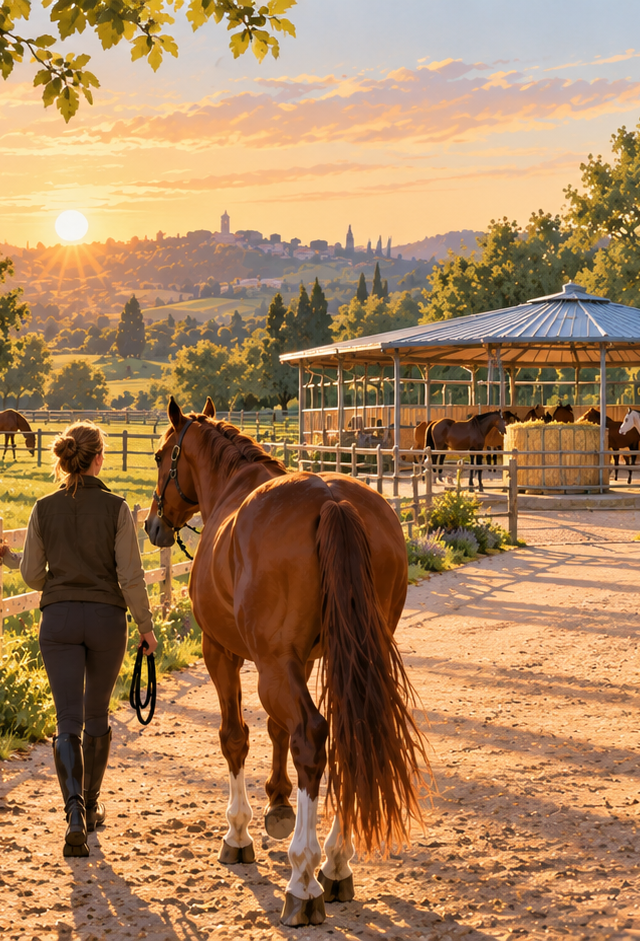
- Grass livery: the most economical option, where the horse lives out.
- Grass and stable, or full stabling: more comfortable and more supervised, so more expensive.
- Livery with services (schooling, care, turnout), the most complete and the most costly.
Between simply renting a field in the countryside and full livery near a large city, the gap can be considerable. Your choice of livery is therefore the first lever on your budget.
The farrier
The farrier's visit comes round regularly: roughly every 6 to 8 weeks. The cost depends on whether the horse is trimmed (barefoot) or shod, and on the number of shoes. It is an unavoidable and predictable expense, to factor into your monthly calculation from the outset.
The vet
Beyond emergencies, there are regular costs to anticipate: vaccinations, wormers, and sometimes an annual dental check. Taken one by one these routine treatments are modest, but they add up over the year. The unexpected (an injury, lameness, colic), on the other hand, can weigh heavily: this is where a financial reserve or insurance makes all its sense.
Feed and supplements
If livery includes forage, this cost is already covered. Otherwise, you need to account for hay, possibly hard feed and a vitamin and mineral supplement. The amount depends directly on the horse's needs: a horse at rest costs less to feed than a sport horse. Our ration calculator helps you estimate the quantities actually required.
Other expenses
- Insurance: public liability (often included in the federation licence), and possibly mortality / vet fee cover.
- Equipment: saddle, bridle, rugs, grooming kit: mainly an upfront cost, with more spread-out replacement later.
- The licence and competitions: if you plan to compete.
How to ease the budget?
Two levers come up often. First, the choice of livery and of how the horse is kept. Second, sharing the horse: share-boarding lets you split part of the costs with another rider, while giving the horse more exercise. Done well, it is often a win for everyone.
Keeping an eye on your spending
A horse means many small expenses spread out over time. Noting them as you go avoids nasty surprises at the end of the year. With GaloPlan, you keep a record of the whole team's care and appointments, which also helps you anticipate upcoming expenses.