When temperatures drop, a horse's needs change. Grass becomes scarce, cold increases energy expenditure, and water can freeze. Managing your horse's diet in winter well means getting through the season without loss of condition or sudden tiredness. Here are the key points to adapt when the cold sets in.
Forage, even more central in winter
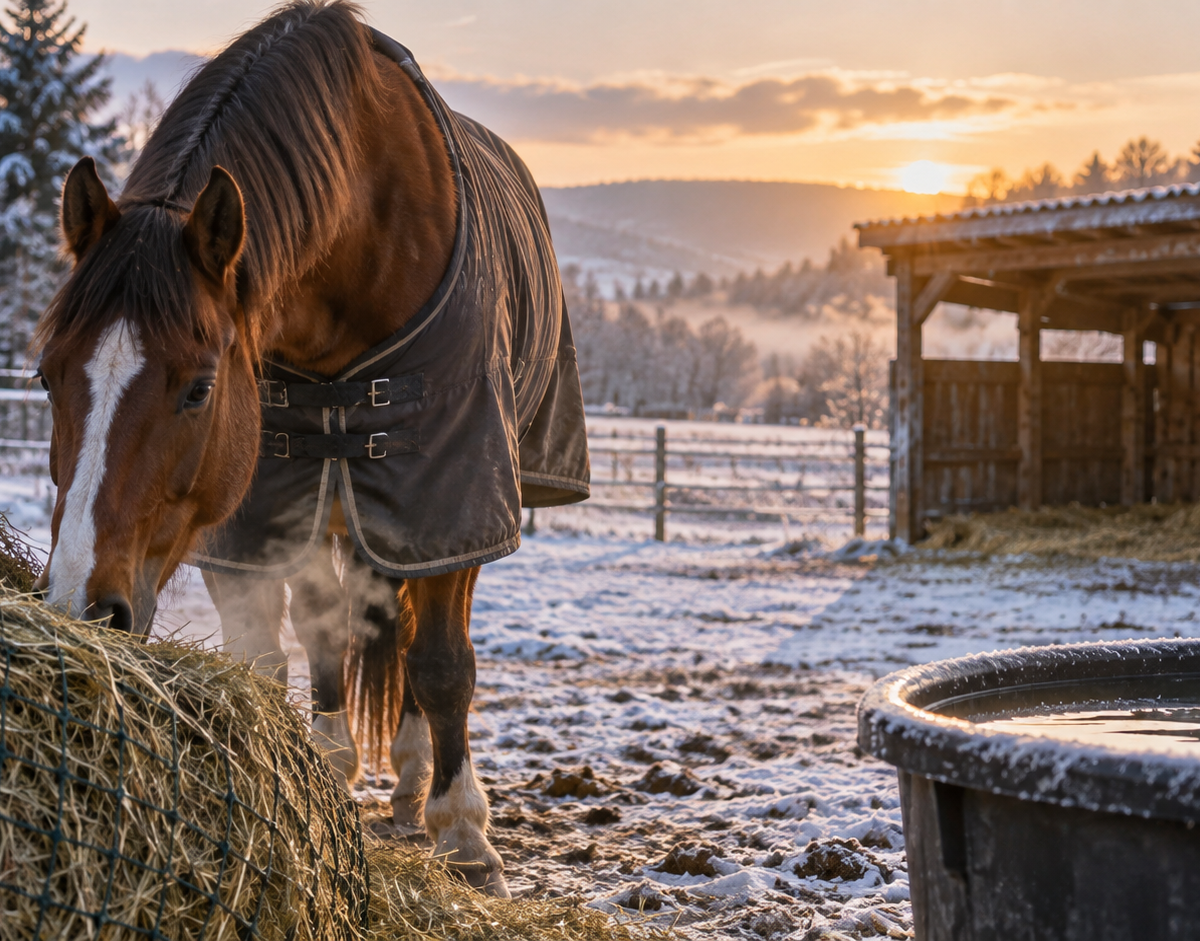
This is the most important point: in winter, you increase forage. Why? Because it is the digestion of forage, in the gut, that produces the most internal heat. Giving more hay is therefore the best way to help the horse fight the cold, far more effective than extra concentrates. When grass is lacking in the field, hay must take over, ideally available in large quantities.
Adapting the ration to work and condition
Needs vary from horse to horse. A horse living outdoors burns more energy than a stabled horse. An older horse, or one that is already a little thin, needs closer monitoring. Check body condition regularly: under a rug or a thick winter coat, weight loss can easily go unnoticed. Our ration calculator helps you reassess amounts according to weight and activity level.
Water: a major point of vigilance
In winter, there are two problems: water freezes, and horses tend to drink less when it is very cold. Yet a horse that drinks little, on a ration rich in dry forage, has an increased risk of colic. Check every day that the water has not frozen, break the ice if needed, and offer water that is preferably not ice-cold. It is a simple but essential habit.
Shelter and rugs
A healthy horse, with a full winter coat and shelter from wind and rain, copes well with the cold. Rugging is not automatic: it is mainly justified for clipped, older, sick or naturally lightly coated horses. A horse rugged unnecessarily can, on the contrary, get too hot. If in doubt, ask your vet or a professional for advice.
Changes, always gradual
As in any season, a change to the ration must be made gently, over several days, to let the gut flora adapt. Switching abruptly to a new batch of hay or suddenly increasing concentrates can trigger digestive upset.
Monitoring the horse's condition all winter
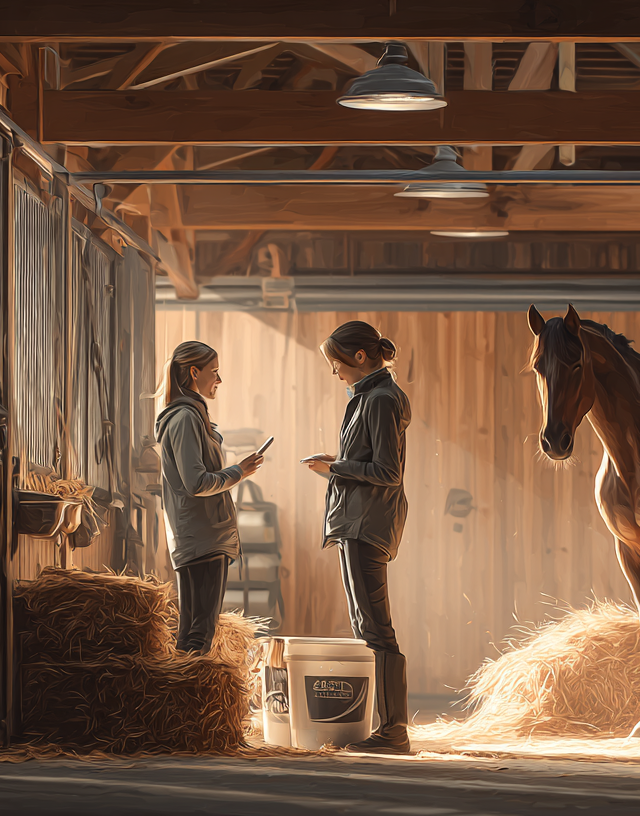
Winter is precisely the season when regular monitoring makes the difference. Recording the ration, body condition and daily observations lets you react before a horse starts to fade. With a shared logbook, the whole team stays on the same page, even when the days are short and the stable rounds pass from one person to the next.