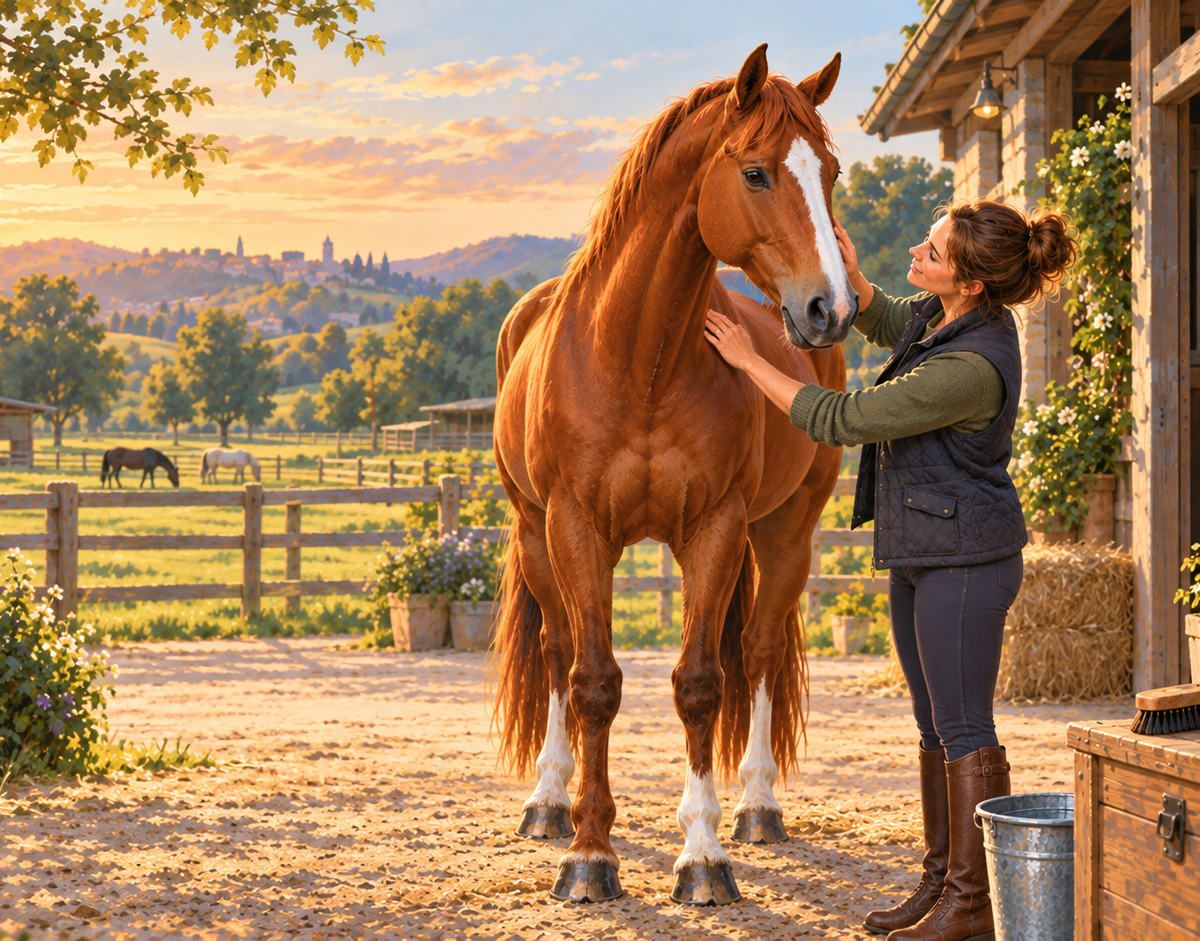
Looking after your horse's health is not limited to the vet's visits: it is first and foremost a matter of daily habits and observation. A horse does not tell you it is unwell, so it is up to us to spot the first signs. Here are the key markers for monitoring your horse's health day to day and reacting before a small worry becomes a real problem.
Observe, every day
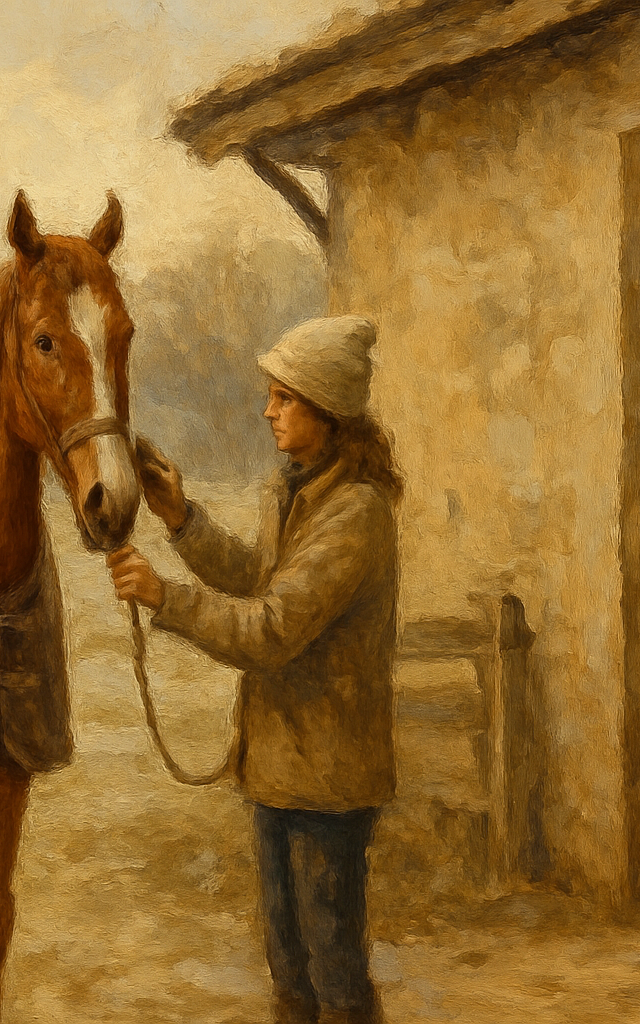
The best preventive tool is the owner's eye. By knowing your horse's usual behaviour, you immediately notice anything out of the ordinary. Every time you visit, get into the habit of checking a few simple points:
- Appetite and behaviour: is it eating normally? Is it lively, or on the contrary dull?
- Droppings: their quantity and appearance tell you about digestion.
- Stance and movement: is it moving normally, without lameness or stiffness?
- Eyes and nostrils: clean, with no abnormal discharge.
- Skin and coat: no wound, swelling or hot spot.
Knowing the normal markers
To recognise the abnormal, you have to know the normal. A horse's temperature at rest is around 37.5 to 38.5 C. It passes several lots of droppings a day and drinks a large amount of water. Knowing how to take the temperature and knowing your horse's vital signs lets you give valuable information to the vet in case of trouble. If there is serious doubt, it is always the vet who decides.
The pillars of prevention
Good day-to-day health rests on a few fundamentals:
- a suitable diet, based on forage, with constant access to water;
- keeping up with vaccinations and a targeted worming programme;
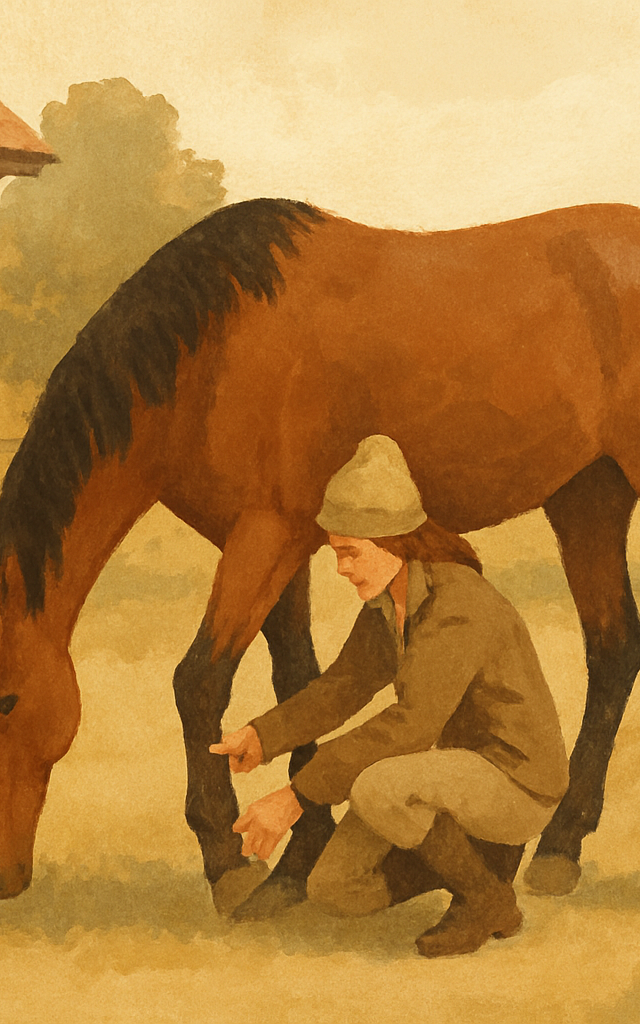
- regular foot care with the farrier;
- daily movement and social life;
- a clean and safe environment.
You can keep track of vaccination and worming due dates with our free calendar.
Reacting quickly when in doubt
Some signs mean you should call the vet without delay: refusing to eat, signs of colic, marked lameness, a significant wound, very unusual behaviour. Faced with these situations, it is better to call for nothing than to call too late.
Writing things down to follow them better
Recording your observations, even brief ones, changes everything over time: you spot recurrences, you track how things develop, and you pass reliable information to the vet. It is even more useful when several people look after the horse. With shared care tracking, everyone knows what to write down and no one misses an important sign.