Every year, the same question comes up as soon as temperatures drop: how do you properly prepare your horse for winter, year after year, without rushing or improvising? Between clipping, choosing the rug, time spent in the field or in the stable, there are several decisions to make, often at the same time. We will not cover feeding here: that subject deserves its own article, which you will find in our guide on feeding your horse in winter. Instead, let us focus on organising daily life: what concretely changes in the horse's routine when the cold sets in.
Anticipate the change of season, rather than endure it
The transition to winter does not happen in a day. The coat grows in gradually from the end of summer, the days shorten, the fields slowly turn to muddy ground. Anticipating means asking yourself the right questions before the cold has set in: does my horse work enough to justify clipping? Will its winter coat be an asset or a hindrance? Will the field it uses stay usable in the event of prolonged rain?
These decisions depend on several factors specific to each horse: its age, its state of health, its workload, its breed, and of course the conditions at the yard. There is no single rule valid for every horse, but a few pointers help you see things more clearly.
Should you clip your horse before winter?
Clipping is not automatic. It is justified mainly when the horse works regularly in winter and sweats under its thick winter coat, which lengthens drying time and increases the risk of staying wet too long, and therefore catching cold. A horse at complete rest, living mainly in the field, on the other hand often has no need to be clipped: its winter coat fully plays its insulating role.
There are several types of clip, more or less extensive depending on how the horse is used:
- The full clip, for horses that work intensively and live mainly in a box or in a sheltered active stable.
- The hunter clip, which leaves an area of coat on the back and legs for partial protection, suited to horses that regularly go out hacking.
- The belly and chest clip, lighter, for horses that mainly sweat in these areas without needing a more extensive clip.
Once clipped, the horse loses part of its natural ability to keep itself warm. This is where the rug comes in, becoming an essential complement rather than mere comfort.
The rug, a complement to clipping and lifestyle
Choosing the right rug, at the right time, with the right weight, is important enough to deserve an article entirely of its own. We detail all the criteria to know in our article Horse rug: when to put it on and how to choose well. Simply remember that the decision whether or not to rug depends directly on the clip done, the horse's lifestyle, its age and the actual weather conditions, far more than on a date on the calendar.
A clipped horse, without a suitable rug, ends up in a less comfortable situation than an unclipped horse living outside with its winter coat intact. Consistency between clipping, rugging and lifestyle is essential.
Field or stable in winter: adapting the horse's lifestyle
The question of where the horse lives takes on particular importance as winter approaches, because outdoor conditions radically change the horse's comfort and safety, whether it lives in the field or in a box. We have devoted a full article to this structural choice, worth reading if you are still hesitating between field, box or active stabling. Here, however, are the specific points to watch during the cold season.
The field in winter: mud, shelter and safety
Repeated rain quickly turns the ground to mud, especially around water points, shelters and gateways. This mud is not just a question of comfort: it encourages certain skin conditions on the legs, such as mud fever, and complicates the horse's movement, especially if it is old or has fragile joints. A permanently accessible shelter, positioned to block the prevailing wind, remains essential to let the horse protect itself from the harshest weather.
Fence safety also deserves a check before winter: shorter days and poorer conditions make visual inspections harder to carry out properly, so it is better to do them in advance, in clear weather.
The stable in winter: ventilation, bedding and time outside
A horse that spends more time in the box in winter needs a well-thought-out environment. The temptation to seal the box tightly to keep the heat in can backfire on the horse: air that is too stale, laden with ammonia and bedding dust, encourages respiratory conditions. Good ventilation, even in winter, remains preferable to a completely closed box.
Bedding must be renewed with the same rigour as in summer, or even more so if the horse spends more time in it. And above all, limiting time in the box without daily turnout, even a short one, is never a good idea: movement remains essential to the horse's joint and digestive health, whatever the season.
Adapting health monitoring during the cold season
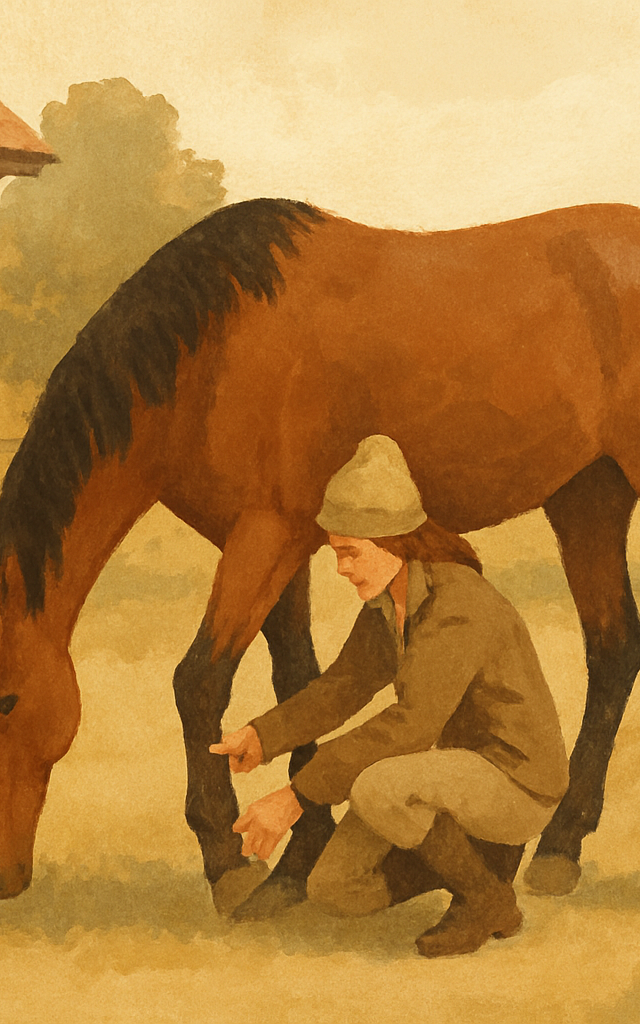
Winter does not just change the horse's comfort, it also changes the points to watch day to day. The thicker coat makes some observations harder: a small wound, the start of an inflammation or a loss of weight can more easily go unnoticed under a layer of dense coat, especially if the horse is not clipped. Taking the time to touch it, to feel it regularly under the rug or coat, remains the best reflex to let nothing slip by.
It is also a period when appointments with the farrier deserve particular attention: some horses go barefoot for the winter, others need studs or shoes suited to slippery ground. These appointments, like routine veterinary check-ups, are easier not to miss when they are noted and flagged in advance rather than handled at the last minute.
Organising winter as a team, without forgetting anything
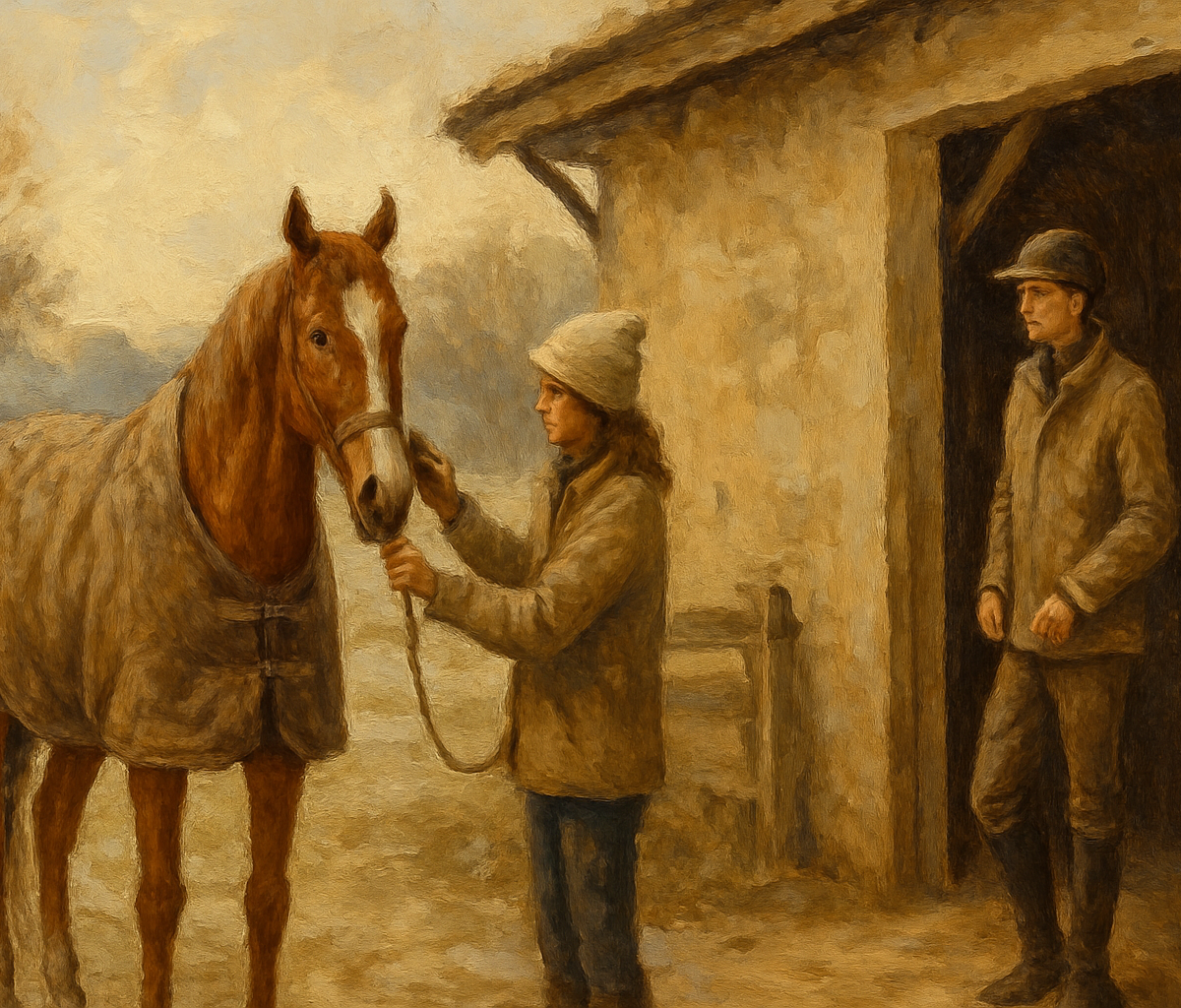
When several people look after the same horse, owner, sharers, yard staff, winter adds a layer of complexity: you need to know who puts the rug on in the morning, who takes it off if the day warms up, who has checked that the horse has no wound under the coat, who has confirmed the appointment with the farrier. This information, passed on verbally or in scattered messages, is easily lost over the busiest weeks of the year.
This is precisely what we set out to simplify with GaloPlan's features: a shared schedule to organise the rugging and turnout rota, a log to note the day's observations, and reminders so you never let an important appointment slip by. The idea is not to add another constraint, but to make sure everyone involved knows exactly where things stand with the horse, even without being there every day.
Keeping a simple, consistent approach
Preparing your horse for winter does not mean overturning all its habits overnight. It is more about gradually adjusting a few things: clipping if the workload justifies it, rugging in keeping with that clip, time spent in the field or box depending on ground conditions, and slightly heightened vigilance over the health signs that become harder to spot under the winter coat. Taken with a little anticipation, each of these decisions stays simple to put in place, and lets the horse get through the cold season in good conditions, with no last-minute nasty surprises.