Mud fever in horses is one of the most common skin conditions in horses living at grass or working on wet ground. It mainly affects the pasterns, sometimes the hocks or forearms, and can quickly become troublesome if it is not dealt with early enough. Nothing dramatic in most cases, but it is best to understand what is happening under the skin in order to act at the right moment and stop the situation from taking hold.
In this article, we take stock of the causes of mud fever, the signs that should catch your attention, and above all the simple steps that help prevent it day to day.
What is mud fever in horses?
Despite its name, mud fever has nothing to do with a mange-type parasite. It is in fact a dermatitis, meaning an inflammation of the skin, that most often develops at the pasterns. The skin, weakened by prolonged exposure to moisture, becomes an ideal entry point for bacteria and sometimes opportunistic fungi already naturally present on the horse's skin.
This weakening of the skin leads to inflammation, scabs, sometimes oozing, and in more advanced cases swelling of the pastern that can make the horse uncomfortable when walking. This same phenomenon is sometimes also called "pastern dermatitis".
The causes and factors that encourage mud fever
Several elements usually combine to trigger mud fever:
- Prolonged exposure to muddy, waterlogged ground or ground soiled by urine and manure;
- An alternation of wet and dry that weakens the skin barrier;
- Long hair (feathers) that holds moisture against the skin instead of letting it evaporate;
- Skin already irritated by rubbing, an allergy or a minor wound;
- Certain horse breeds with abundant feathering, more predisposed, though this does not mean a horse with bare pasterns is safe.
The season obviously plays an important role: autumn and winter, with their waterlogged pastures, are the periods when the most cases are seen. If you are looking to adapt your horse's management to this season more broadly, our article on feeding your horse in winter complements this thinking about cold-season care nicely.
How to recognise the first signs of mud fever
The earlier mud fever is spotted, the more easily it is treated. Here are the signs to watch for during your daily observations:
- Dry or wet scabs at the pasterns, sometimes hidden under the feathers;
- Red, irritated, even oozing skin beneath the scabs;
- A distinctive smell when the scabs are lifted;
- Slight swelling of the pastern in more advanced cases;
- Sensitivity to the touch or slight lameness if the inflammation becomes significant.
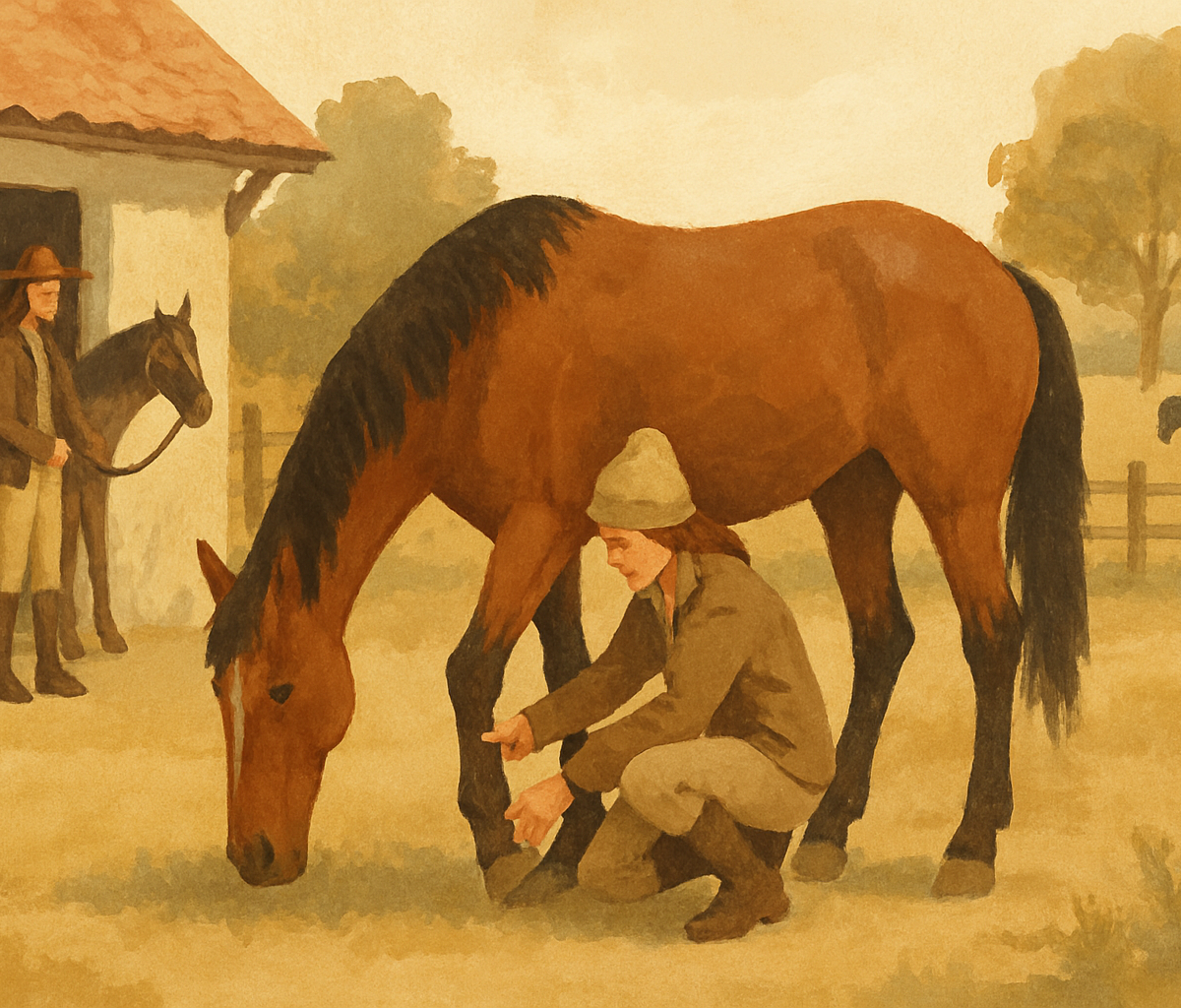
These signs can easily go unnoticed if the horse has thick feathers or if the pasterns are not inspected regularly. That is why including this check in a daily care routine makes all the difference, especially in at-risk periods.
Preventing mud fever day to day
Limit prolonged contact with moisture
The first lever for prevention remains ground management. When possible, limiting the time the horse spends in the muddiest areas of the field, particularly around water points or gateways, considerably reduces the risk. Rotating horses across different paddocks or setting up firm, stabilised areas near the shelters can also help.
Dry the legs after a wet outing
After an outing in the rain or in a waterlogged field, it is better to let the mud dry naturally rather than systematically rinsing the pasterns with cold water, which can on the contrary prolong the moisture in contact with the skin. Once the mud is dry, it comes off more easily with a soft brush.
Adjust the length of the feathers
In horses with very abundant feathers, a light clip can make it easier for the skin to dry and allow better visual monitoring. This decision is made case by case, depending on the climate, the horse's way of life and its history of mud fever.
Avoid products that are too harsh
It can be tempting to multiply shampoos or disinfectant products "just in case". Yet excessive washing or the repeated use of stripping products weakens the natural skin barrier further. Simple, regular hygiene is better than unjustified intensive preventive treatment.
What to do at the first signs of mud fever?
As soon as you spot scabs or emerging irritation, a few simple steps often help limit how it develops:
- Gently clean the area with lukewarm water and a suitable mild soap, without scrubbing aggressively;
- Remove the scabs gently when they come off easily, without forcing if they are still stuck;
- Carefully dry the area, including between the hairs, before returning the horse to a wet field;
- Apply, if needed, a suitable cream or ointment recommended by your vet;
- Temporarily limit exposure to mud while the skin heals.
Avoid rubbing insistently at firmly attached scabs: this can cause bleeding and delay healing rather than speed it up.
When to call the vet?
Most mild cases of mud fever clear up with suitable hygiene and a little patience. But certain signs should prompt you to consult without delay:
- Marked swelling of the pastern or significant heat to the touch;
- Lameness that sets in or worsens;
- Lesions that spread despite the care given;
- Abundant oozing or a clearly abnormal smell;
- No improvement after one to two weeks of regular care.
In these cases, specific treatment, sometimes with a topical antibiotic, may be necessary. To organise these exchanges with your vet well, our article on managing vet and farrier appointments will give you useful reference points.
Tracking progress to act at the right moment
Mud fever tends to reappear from one season to the next in horses that are already sensitive. Systematically noting the episodes, their duration, the care applied and its effectiveness helps you better anticipate at-risk periods and adjust prevention the following year. That is exactly what a well-kept care record allows, particularly when several people look after the same horse: owner, share-boarder, riding-school riders.
With an app like GaloPlan, these observations can be shared in real time among everyone involved, which avoids oversights and lets each person know where the ongoing treatment stands, without having to coordinate through scattered messages.
What to remember
Mud fever in horses is above all a matter of vigilance and consistency. Observing the pasterns daily, limiting prolonged exposure to waterlogged ground, drying properly after wet outings and acting at the first signs are enough, in the vast majority of cases, to stop the situation from worsening. And when several people are involved with the same horse, sharing these observations at the right moment often makes all the difference between a problem quickly resolved and a case of mud fever that drags on all winter.