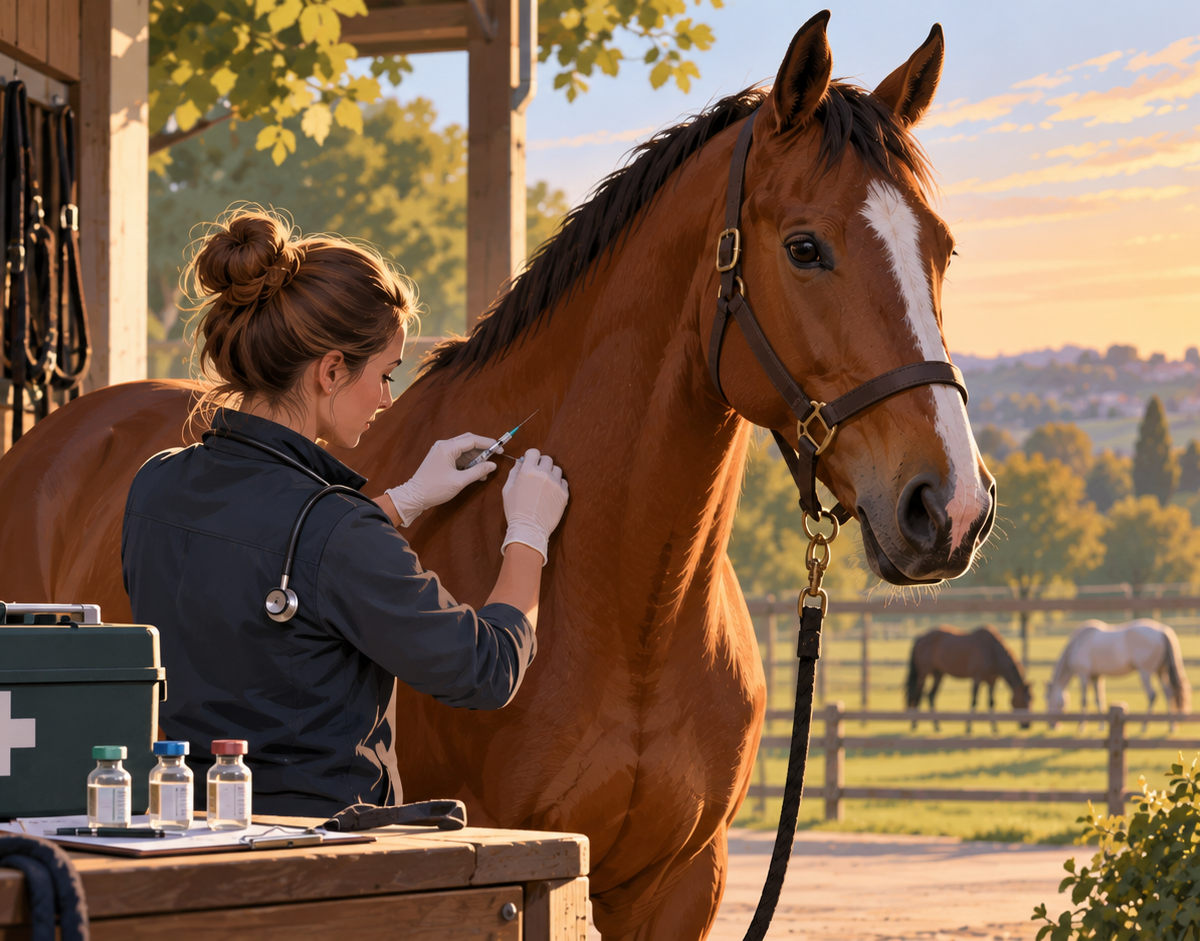
When people talk about horse vaccines, many owners think only of tetanus. Yet three diseases deserve particular attention: equine flu, tetanus and equine herpesvirus (rhinopneumonitis). These conditions circulate actively in stables, at shows and in riding centres, and a well-managed vaccination programme remains the simplest way to avoid many complications. In this article, we take stock of these three vaccines, their purpose, their schedule and how to never lose track of the boosters.
Why vaccinate your horse?
The horse is a social animal that rarely lives in isolation: it meets other horses at grass, at shows, on hacks or simply in its stable. This communal life encourages the circulation of respiratory viruses and bacteria that can have serious, sometimes fatal consequences. Vaccination does not make a horse invulnerable, but it strongly reduces the risk of developing a severe form of the disease and limits spread within a group.
Beyond individual protection, being vaccinated also means protecting the other horses in the yard: foals, pregnant mares, elderly or immunocompromised horses are particularly vulnerable. Good collective vaccine cover benefits everyone.
The three essential vaccines: flu, tetanus and equine herpesvirus
These three diseases do not share the same severity or the same mode of transmission, but they are all part of the core vaccination base recommended for a horse living in a group or taking part in shows.
Equine flu
Highly contagious, equine flu is transmitted by the respiratory route, sometimes over long distances through a simple whinny or cough. It causes fever, a dry cough, nasal discharge and great fatigue. In an otherwise healthy horse, the infection usually clears on its own, but it requires strict rest of several weeks to avoid cardiac or respiratory complications. This is precisely why an up-to-date flu vaccine is required to access shows.
Tetanus
Tetanus is caused by a bacterium present in the soil, which enters the body through the slightest wound, even a tiny one. Unlike flu, it does not spread from one horse to another: the environment is to blame. The disease causes generalised muscle contractures and remains, in the vast majority of cases, very serious despite treatment. That is why the tetanus vaccine is considered non-negotiable for any horse, whether it lives at grass, in a stable or at an active yard.
Equine herpesvirus
Caused by an equine herpesvirus, rhinopneumonitis affects the respiratory tract but can also, in its most serious forms, cause abortion in pregnant mares or neurological disorders. The virus sometimes remains latent in the body and can reactivate during periods of stress, which explains why regular boosters are particularly important, notably for breeding mares and horses living in groups.
The vaccination schedule, a reference not to lose sight of
Each vaccine has its own rhythm: primary vaccination in two closely spaced injections, then annual or six-monthly boosters depending on the protocol agreed with the vet. This schedule can vary slightly from one horse to another, depending on its age, its way of life and its level of exposure to other equines. We have detailed month by month the deadlines to watch in our article dedicated to the horse vaccination schedule, handy for finding your way from the very first injection.
What often complicates matters is not the protocol itself, but remembering it several months in advance, especially when several people look after the same horse. A booster missed by a few weeks can be enough to invalidate the vaccine cover required at shows, or simply weaken the animal's protection.
Special cases to watch
Some horses call for heightened vigilance:
- Foals: their maternal protection gradually declines in the first months, which calls for a suitable primary vaccination protocol, to be started at the time indicated by the vet.
- Pregnant mares: an equine herpesvirus booster is often recommended at certain stages of pregnancy to limit the risk of viral abortion.
- Competition horses: flu must be up to date according to a strict schedule, failing which access to classes can be refused. This is worth checking well before completing your show preparation checklist.
- Elderly or weakened horses: their immune response can be reduced, a point to discuss with the vet to adjust the booster schedule if needed.
How to never forget a booster again
In a yard where several people take turns (owner, share-boarders, stable staff), it easily happens that no one knows exactly when the last vaccine was given, or who was supposed to deal with it. That is often where oversights arise, not through negligence, but through a lack of shared visibility.
Two simple habits help avoid this kind of situation. First, systematically note the date and type of vaccine given, with the vet's name, in a care record accessible to everyone who looks after the horse. Then, set up a reminder in advance rather than relying on anyone's memory, as we explain in our article on managing vet and farrier appointments.
This is exactly what we wanted to simplify with GaloPlan: a shared care record where each vaccine is logged once and for all, with reminders sent to all the riders concerned before the deadline. No more relying on a mislaid paper record or on one person's memory: the whole team around the horse sees the same information, at the same time.
What to do in case of doubt or an adverse reaction?
After an injection, it is normal to see slight fatigue or mild tenderness at the injection site for a day or two. On the other hand, a high fever, marked dullness or significant swelling should prompt you to contact the vet quickly. This kind of reaction remains uncommon, but it is better to report it so the protocol for the next injections can be adjusted if necessary.
In the same way, if you are unsure of the date of the last booster or of the protocol to follow for a horse you are getting to know (purchase, taking into livery, share-boarding), the safest reflex is to contact the regular vet with the horse's vaccination record, rather than relying on a rough estimate.